
Late summer is when owners hit this decision. Afternoon rain knocks outdoor jobs off one day and onto the next. Then an owner here tries to rebuild the week inside a ready-made app. Custom Software in Jungle Terrace, St. Petersburg, Florida is the better fit when that rebuild keeps failing. The work hops from house lot to house lot, and the app assumes one front door. So you choose custom software when the tool cannot hold the route rules your crew already uses.
Reviewed by Keanan Kintzel
Questions about custom software? Call for More Info
Count how many of those rules you currently handle on paper. After a few rainy weeks, most owners already know the rules that keep falling off the app. When crews work separate lots in Jungle Terrace, St. Petersburg, Florida, the day is a string of driveways. A tech drives, parks, works, and drives again.
What a finished custom schedule looks like
We have watched crews run a week from a screen built around their stops. Because each stop is a house lot, the schedule has to carry drive time and gate notes. It also has to flag jobs that cannot sit in the heat past noon. When a customer calls to move Thursday, one tech’s list should update before that tech leaves the driveway. So the finished tool is the week’s actual stop list.
We have started these jobs by writing the route down first. We have sat with the person who builds the week and written each rule in plain words. Then we mark which rules are daily and which show up only after rain. After that, we judge a first screen against a real week. A missed rinse gap shows up there fast.
After the first month, the test is ordinary. Did anyone go back to a paper list in the truck? When they did, we ask which rule the software dropped. Then we put that rule back in. For example, some crews skip back-to-back chemical jobs on small lots. The rinse takes longer than a default gap allows.
Where a ready-made app runs out
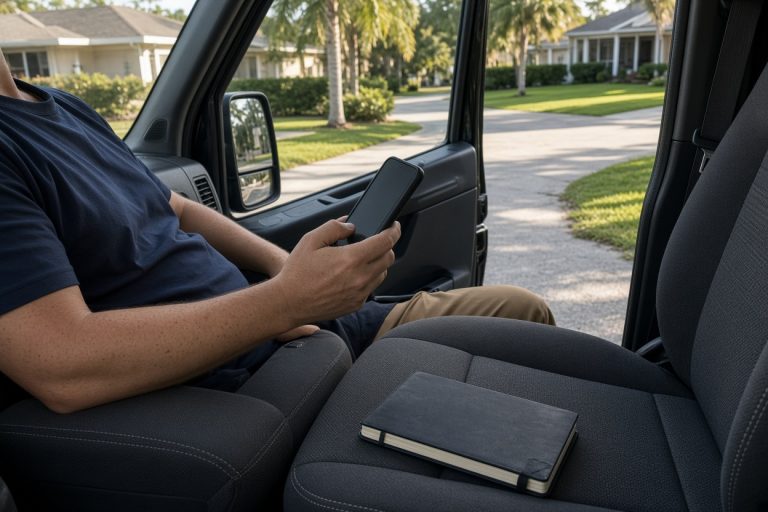
A ready-made app handles a day that looks like its demo. You pick a time and a person, then you save. But house-lot work adds details the demo skips. Those details include pets in a side yard and a hose bib the tech has to find. A customer who only wants mornings before a shift across Pinellas County.
Because the lots sit apart, drive time between them often runs longer than the job itself. After the pins are on the map, you still order them when rain and callbacks stack up. So a map view alone leaves the hard ordering undone.
You can stay and keep a paper workaround for the odd stops. A different ready-made app is worth a trial when its demo already shows driveway-to-driveway days with uneven gaps. Custom software comes in after those paths still leave your real rules outside the tool. We have had owners call after they bought a second app to patch the first. The two tools did not share a customer list. Then double bookings showed up on the same lot.
Questions about custom software? Call for More Info
What to ask before you hire

Before you hire anyone, including us, write down the rules your crew will not drop. Then use the questions below. Ask them before you sign, and keep the answers with your route notes.
- Which jobs still land on paper after the app is set up, and why that happens
- Who changes a route when a customer calls at 4 p.m. and the tech is already two lots away
- What happens to old job notes if you leave the tool in two years
- Whether the quoted work includes the first fixes after crews run real lots
A build often sits beside Administrative Tools you already use for invoices. Sometimes the same project needs a Web Design change. A customer can then request a window without a long phone chain. When the route rules are still fuzzy, Business Consulting comes first, since a build will lock in a messy process.
How long the first version takes
Usually a first version for a small crew takes a few months of build and test. Because we write the quote out line by line, you can see which rules sit in that first version. After crews run it for a couple of weeks, expect a round of fixes. That round is normal. Plan staff time for it. The figure on a proposal leaves out those hours.
Afterwards, someone on your side should be able to change hours and blackout days without a developer. When that path is missing, every gate-code update becomes a support ticket. So ask who owns those edits before the first week goes live.
Some owners want the schedule in a pocket. Then we look at a field app for lot routes, since the phone is where the crew already works. When you want the scoping laid out in one place, start with custom software builds. Bring the rules your crew will not drop.
Someone has to answer questions in the first two weeks, or the build waits. When that person is also driving the route, the calendar slips. For example, we have seen a first version stall while the gate-code person was out on jobs.
See also: Belleair.