
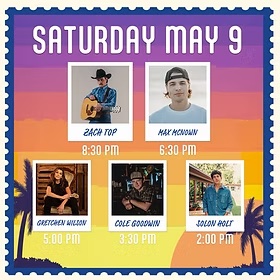
Troy Vollhoffer’s rise with Country Thunder has become a case study in modern live entertainment entrepreneurship. Through his company, Premier Global Productions, he has expanded Country Thunder Music Festival into one of the most recognizable touring festival brands in North America, consistently bringing major country headliners to multiple states each year. His business model relies on scale, mobility, and repeatable production systems—treating each festival stop like a carefully engineered touring “pop-up city” built for large crowds, tourism spending, and fast turnaround logistics.
That operational flexibility was tested in Florida when Country Thunder had to quickly relocate from St. Pete Beach at the TradeWinds Resort to Coachman Park. The move was prompted by environmental permitting concerns tied to sea turtle nesting season and coastal wildlife protections. Instead of scaling back or canceling, Vollhoffer’s team rapidly rebuilt the festival footprint inland—reworking staging, power, crowd flow, and vendor placement in a compressed timeline. In an industry where major festivals are often locked into venues years in advance, the speed of that pivot stood out.
 What made the transition even more efficient than in earlier eras of touring entertainment was the strategic use of social media as a real-time marketing engine. Instead of relying heavily on traditional advertising buys, the Country Thunder team and its artists were able to instantly redirect audiences through Instagram, Facebook, TikTok, and email blasts. Announcements of the venue change spread almost immediately across the Tampa Bay region, with artists reposting updates directly to millions of followers. This reduced marketing lag time to near zero and allowed ticket demand to stabilize quickly despite the last-minute relocation.
The speed of both the operational shift and the communication strategy draws a strong parallel to the old Ringling Brothers traveling circus era, when entire productions moved from town to town like clockwork. But unlike the rail-based logistics of that period, today’s “traveling show” is powered by digital distribution. Vollhoffer’s approach blends that classic touring discipline—tight schedules, modular staging, and coordinated crews—with modern social amplification, where a single post can reach more people than a full regional advertising campaign once could.
Much of this adaptability reflects Vollhoffer’s background and formative experiences in Canada and exposure to the structure of professional hockey culture and the NHL ecosystem. In that environment, teams operate on relentless travel schedules, tight performance cycles, and high-pressure execution across multiple cities—skills that translate directly into managing touring festivals. That mindset, combined with today’s social media infrastructure, has helped Country Thunder evolve into a highly mobile entertainment system that can absorb disruption, communicate instantly with audiences, and still deliver large-scale economic impact.
For the Tampa Bay region, the result is a resilient tourism and entertainment engine. Even with the venue shift, Clearwater, St. Petersburg, and surrounding communities benefit from concentrated visitor spending across hotels, restaurants, rideshare services, and nightlife. Meanwhile, social media ensures that the economic ripple effect extends beyond geography—turning a single festival weekend into a digitally amplified regional event that reaches far beyond Clearwater and St. Petersburg, and reinforces Tampa Bay’s growing status as a destination market for large-scale touring festivals.